
Our Appellations
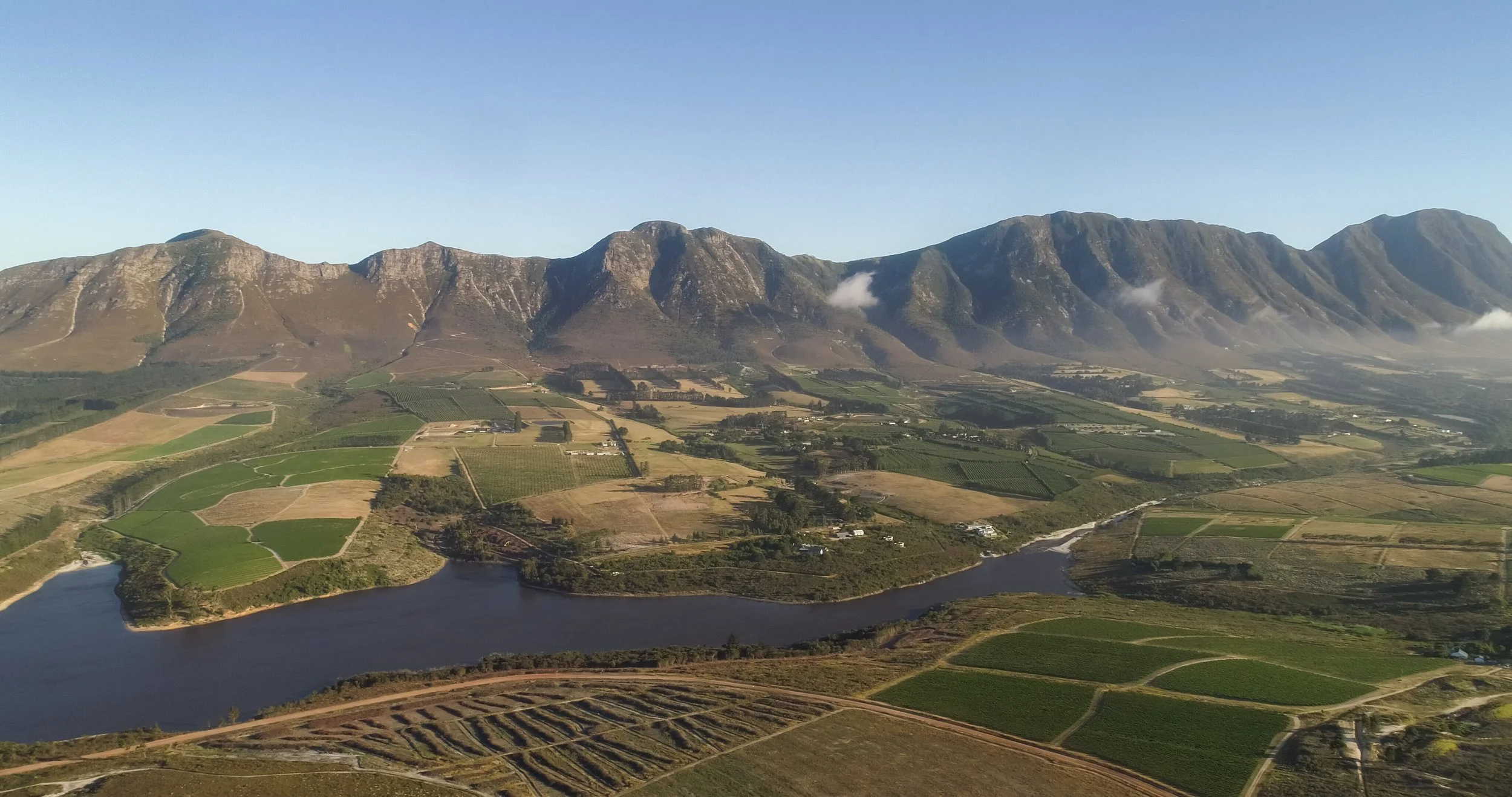
The terroir of Hemel-en-Aarde
Background
With the reclassification of Walker Bay as a Wine District in 2004, producers were given the opportunity to establish more relevant Wine Wards, working in consultation with a committee of soil specialists and viticulturists. This process led to the creation of three Wards in the Hemel-en-Aarde area:
Hemel-en-Aarde Valley, established in August 2006
Upper Hemel-en-Aarde Valley, also established in August 2006
Hemel-en-Aarde Ridge, established in June 2009
All three appellations boarders the beautiful seaside town of Hermanus and follow the scenic Hemel-en-Aarde Road (R320) as it winds from Hermanus toward Caledon. They appear in the order listed above, beginning just 1 km from the turn-off and extending to 18.2 km at the furthest point.
Common Factors
Common Factors
Particularly strong maritime influence.
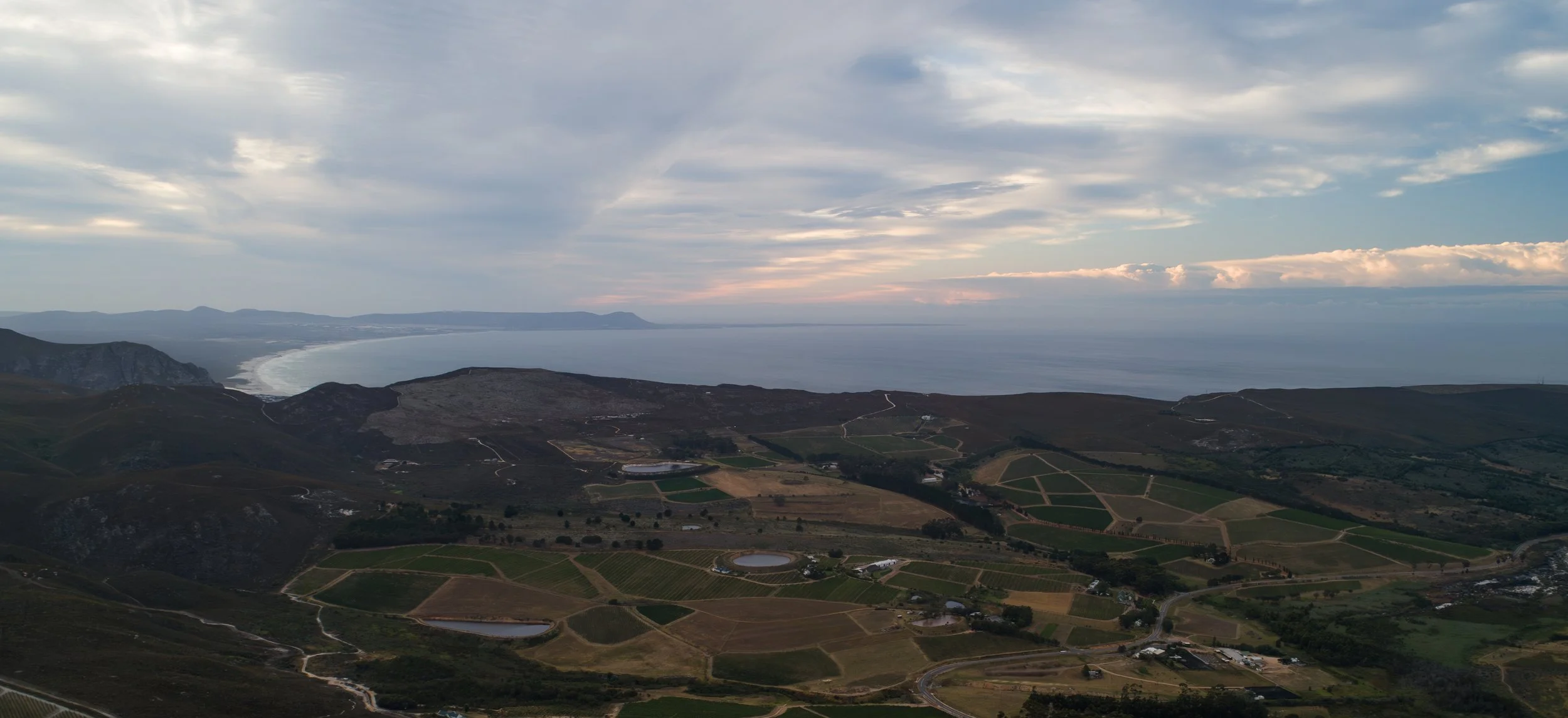
The Atlantic Ocean Walker Bay, with its cooling influence of the cold Benguela current as well as the prevailing summer wind, the Southeaster enhances the cooling effect of proximity to the sea.
Higher than average rainfall for the winelands.
Annual average rainfall is in the region of 750 mm if a ten-year average is taken. Hemel-en-Aarde with its more even rainfall distribution, affords the possibility of dispensing with irrigation.
Cool in a South African context.
Hemel-en-Aarde averages around 25 Centigrade over a 10 year period, in other words the Hemel-en-Aarde Area is significantly cooler than most winegrowing areas in South Africa for the most important months of the year for wine quality.
Further south than most of the winelands.
Situated 34º 24' 3.2” and 34º 19' 51.5" south, the three Hemel-en-Aarde Area appellations do not come close to approximating the latitudes of the great European winegrowing regions and are cooled more by close proximity to the cold Atlantic Ocean than latitude.
Hemel-en-Aarde Valley
(Stretches for 6.7 kilometres along the R320 from Hermanus)
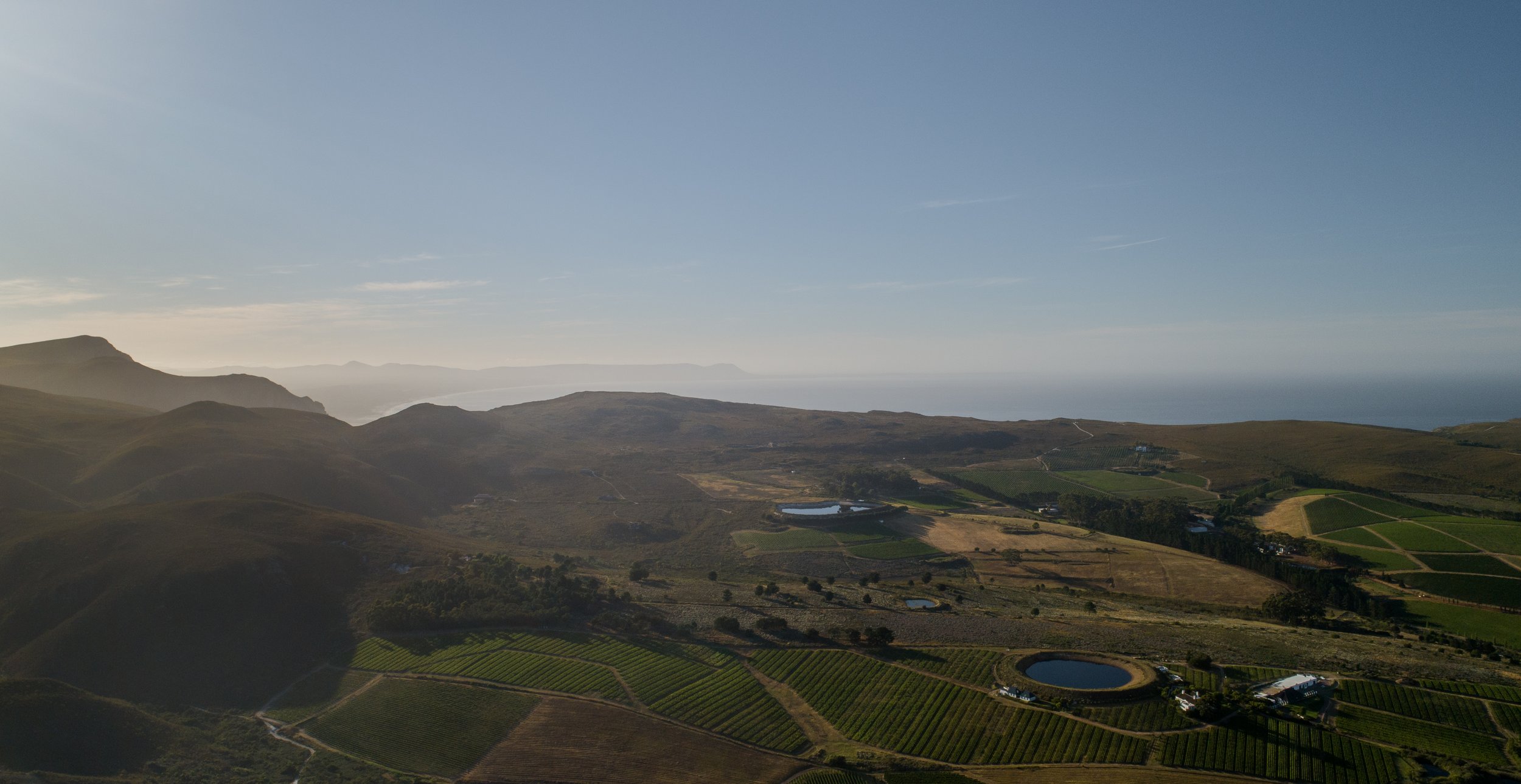
This is the first appellation as you leave Hermanus and enter the Hemel-en-Aarde Valley (geographically speaking). It is also home to the first vineyards planted in the area and is the closest to the Atlantic Ocean of the three appellations.
The overwhelming majority of the vineyards in this appellation are planted on northeast, north and northwest facing slopes of Bokkeveld Shale-derived soil on the southern side of the Onrust River. This soil has an unusually high clay content which although it varies from 25% to 55% tends on average to be much higher than the Malmsbury Shale-derived soils of the west coast. The clay contents of these soils approximate the clay contents of the Cote D’Or in Burgundy, although they tend to be shallower and far stonier. In addition, they do not have the limestone content or limestone bedrock, but have pure clay subsoil and solid shale bedrock. For the South African winelands these soils would be classified as low-vigour and more marginal.
Higher up the northern slopes of the Hemel-en-Aarde Valley and on the south facing slopes of the valley, the soils are Table Mountain Sandstone-derived. These quartzitic, sandy soils have a very low to non-existent clay content and are light structured, generally far deeper and have the potential for greater vigour.
Upper Hemel-en-Aarde Valley
(6.7 kms from the R320 turn-off for a further 6.6 km)
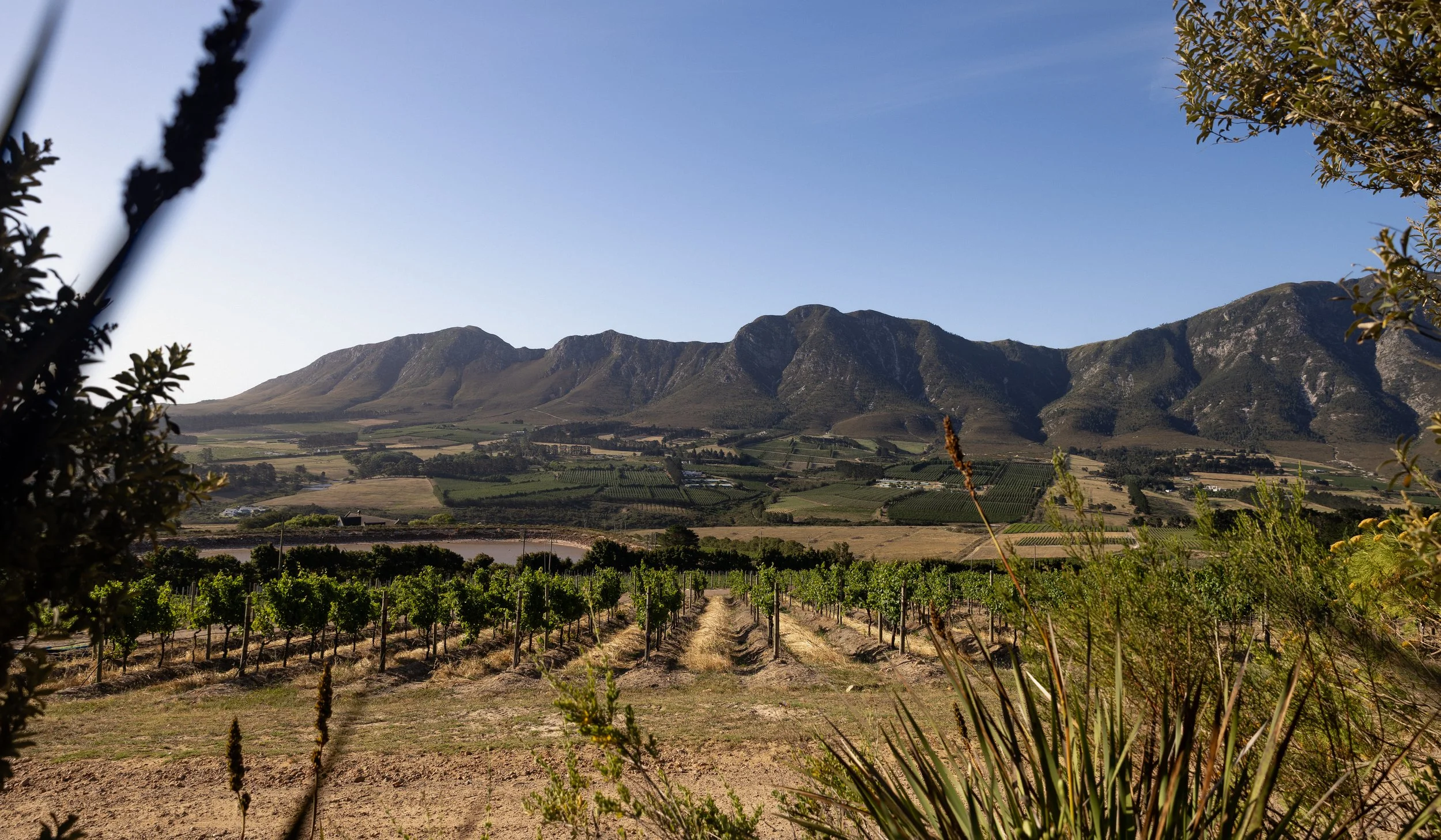
This is the second appellation encountered as you proceed northeast up the Hemel-en-Aarde Valley (geographically speaking) from Hermanus, and is the largest of the three Hemel-en-Aarde Area appellations. Ripening tends to occur later here than for the Hemel-en-Aarde Valley appellation. It is the second closest Hemel-en-Aarde Area appellation to the sea.
The vineyards in the Upper Hemel-en-Aarde Valley are planted on both the north facing slopes (on the southern side of the Onrust River) and the south facing slopes (on the northern side of the Onrust River). The soils change in this appellation away from Bokkeveld Shale-derived soils to lighter structured Table Mountain Sandstone-derived soils, largely on the north facing side of the Onrust River, and a rare occurrence of decomposed granite soils, largely on the south facing side of the Onrust River. In places these lighter structured soils overlay a subsoil with a significant clay content.
As for all of the Hemel-en-Aarde Area appellations there are numerous different soil structural classifications within these broad groupings of soil types.
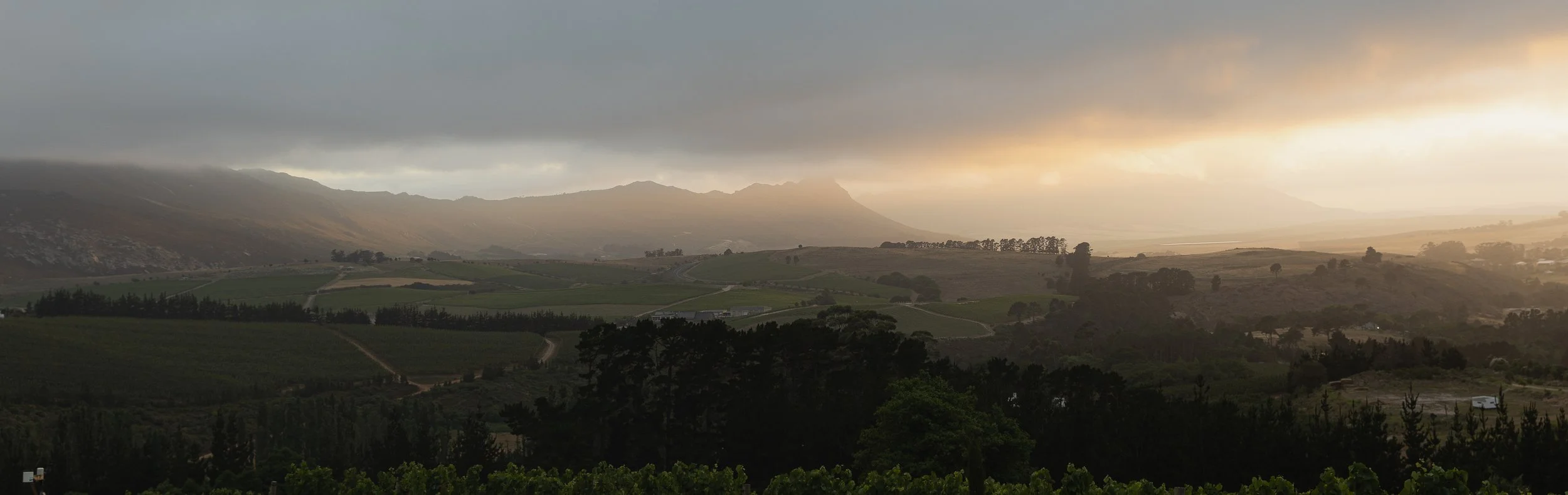
Hemel-en-Aarde Ridge
(starts 13.3 kms from the R320 turn-off and ends 18.2 km from R320 turn-off)
This is the third and smallest appellation encountered as you proceed along the R320 and the furthest down the Hemel-en-Aarde road. Ripening here generally occurs later than the other two Hemel-en-Aarde appellations, due in part to the lofty elevations of the Ridge.
Bokkeveld Shale-derived soils re-occur in the Hemel-en-Aarde Ridge and the overwhelming majority of the vineyards are on these stony clay-rich soils. The vineyards are planted with many different aspects from southerly to northerly, and the average altitudes of these vineyards are the highest of the three Hemel-enAarde Area appellations. The highest mountain slopes of this appellation have lighter structured Table Mountain Sandstone-derived soils.


